
Evidence-based insights to help you understand and maintain the woody plants in your landscape
Tree care requirements shift throughout the year as growth patterns respond to environmental cues and dormancy triggers
Active growth begins as temperatures rise consistently above freezing. This is optimal timing for structural pruning before full leaf expansion. New shoots are vulnerable to late frost damage, so monitor weather patterns. Apply slow-release fertilizers to support vigorous growth through summer months.
Heat stress and water deficit become primary concerns during peak growing season. Deep watering encourages root development while surface irrigation promotes shallow root systems. Watch for pest activity that escalates in warm conditions. Avoid heavy pruning that removes protective foliage during intense sunlight.
Trees redirect energy from leaf production to root growth and carbohydrate storage. This window is excellent for planting new specimens as roots establish before winter. Remove deadwood and crossing branches. Rake fallen leaves to prevent fungal disease overwintering in decomposing foliage.
Deciduous trees enter dormancy, making structural issues clearly visible without leaf cover. This is ideal timing for major pruning operations. Protect young specimens from frost heaving with mulch layers. Monitor for snow and ice accumulation that can break branches under excessive weight.
Effective irrigation practices directly impact root development and overall resilience. Most established trees require supplemental water only during extended dry periods.
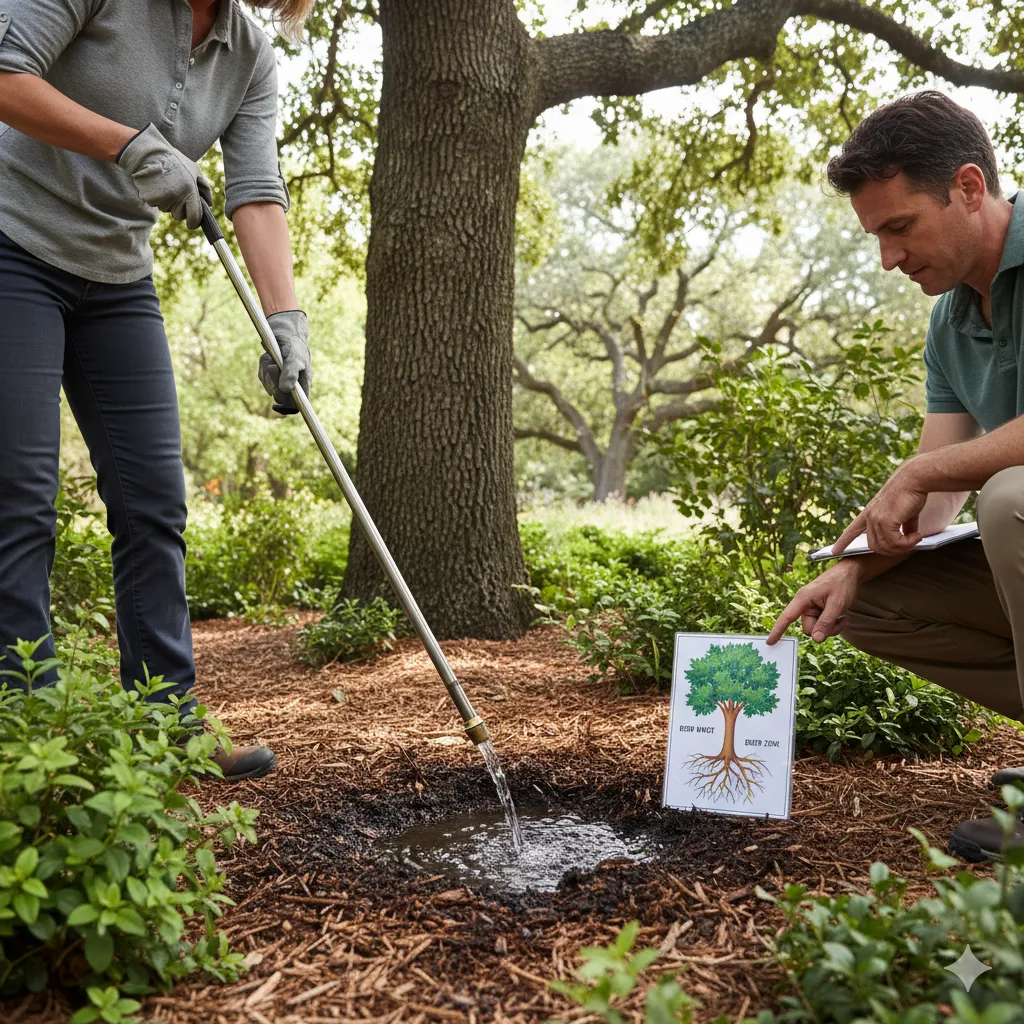
Deep watering promotes extensive root systems that access moisture from lower soil horizons. Apply water slowly to allow penetration rather than runoff. Newly planted specimens need consistent moisture for two growing seasons to establish functional root networks.
Frequency depends on soil type, weather conditions, and tree species. Clay soils retain moisture longer than sandy soils. Native species adapted to local rainfall patterns generally need minimal supplemental irrigation once established.
Early detection allows intervention before damage becomes irreversible. Regular observation reveals subtle changes indicating stress or disease
Yellow or brown foliage outside normal autumn timing suggests nutrient deficiency, root damage, or vascular disease. Nitrogen deficiency causes uniform yellowing of older leaves while iron chlorosis appears as yellowing between leaf veins. Root issues from compaction or grade changes manifest as overall canopy thinning and premature autumn colors.
Progressive dieback starting from branch tips indicates several possible issues including drought stress, root dysfunction, or canker diseases. Inspect bark for sunken lesions or discoloration. Check soil moisture levels and drainage patterns. Sudden dieback across multiple branches may indicate vascular wilt diseases requiring laboratory diagnosis.
Vertical cracks, missing bark sections, or fungal fruiting bodies on trunks signal structural compromise. Frost cracks appear on south-facing trunk sides after rapid temperature fluctuations. Mechanical damage from mowers and string trimmers creates entry points for decay organisms. Consult professionals when trunk damage exceeds superficial wounds.
Unusual holes in bark, sawdust accumulation, or sticky honeydew residue indicate insect activity. Boring insects like emerald ash borer create distinctive exit holes and serpentine galleries under bark. Sucking insects such as aphids and scale produce honeydew that attracts sooty mold. Early detection improves management outcomes significantly.
Time-tested practices that promote long-term tree health and landscape sustainability
Apply organic mulch in a donut shape around the base, keeping material several inches away from trunk bark. Maintain a depth of two to four inches to moderate soil temperature and retain moisture. Excessive mulch depth or volcano mulching against trunks encourages rot and pest harboring.
Prune most species during dormancy to minimize stress and maximize healing response. Avoid pruning oaks during active growing season in regions with oak wilt disease. Remove dead branches any time of year. Make cuts just outside the branch collar to promote proper wound closure.
Newly planted trees require attentive care during the establishment period. Remove nursery stakes after one year to encourage trunk taper development. Avoid fertilizing first season to encourage root exploration. Maintain consistent moisture without waterlogging soil. Protect bark from mechanical damage with temporary guards.
Avoid soil compaction within the dripline by limiting vehicle and foot traffic. Compacted soil restricts oxygen availability and water infiltration that roots require. Installing permeable hardscaping or designated pathways preserves critical root zone areas. Grade changes that add or remove soil over roots often lead to decline.
Our certified arborists can assess your specific situation and provide recommendations tailored to your landscape conditions
Discuss Your Questions